

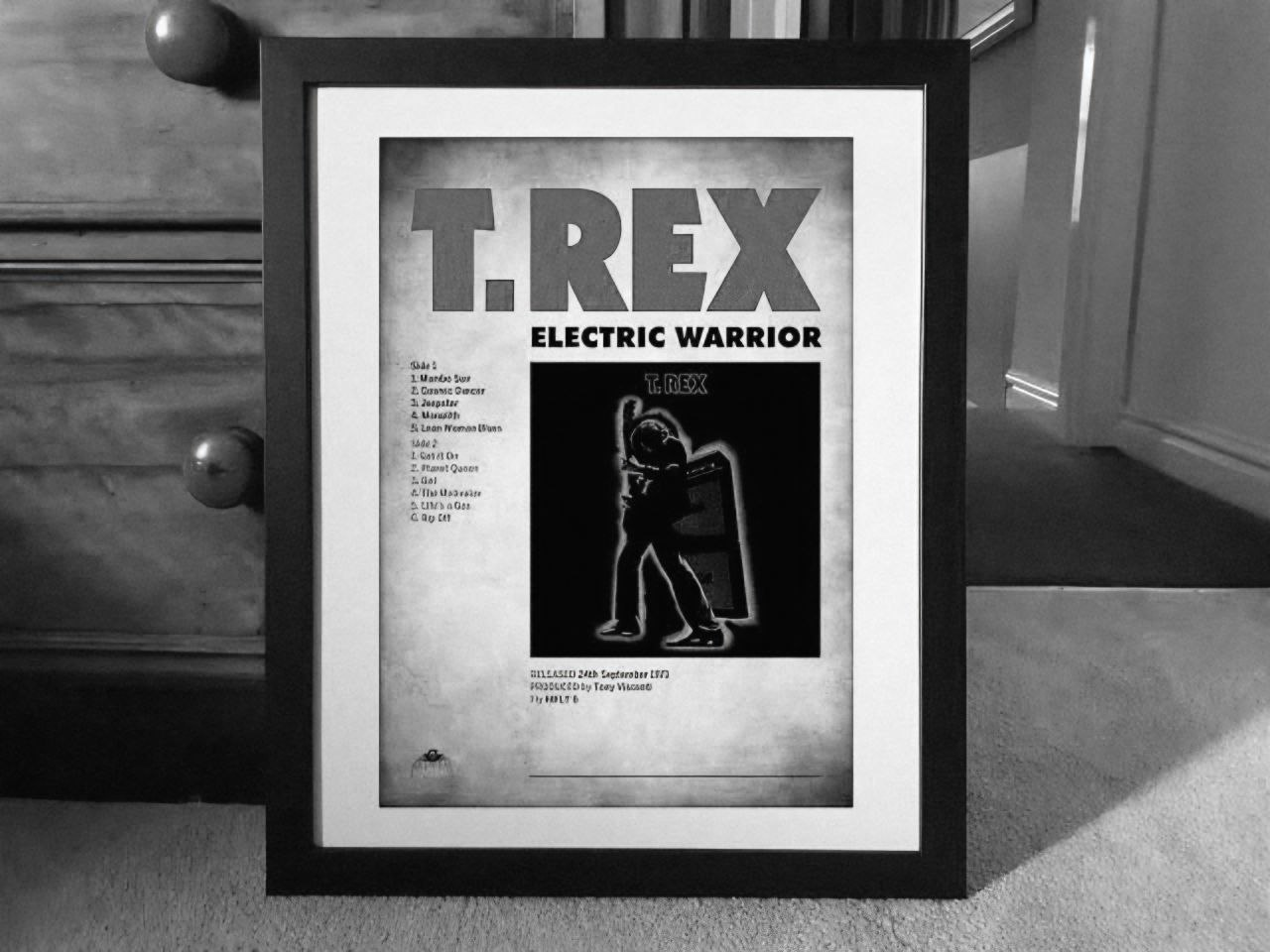
Ci sono album che raccontano un'epoca e altri che, in qualche modo, contribuiscono a crearla. “Electric Warrior” dei T. Rex appartiene decisamente alla seconda categoria. Pubblicato nel Regno Unito il 24 settembre 1971, il disco segnò uno dei momenti decisivi nella trasformazione del rock britannico e contribuì a definire l'estetica e il linguaggio del glam rock. A 55 anni dalla sua uscita, continua a essere ricordato per la sua capacità di unire immediatezza pop, energia rock, sensualità e un'immagine completamente fuori dagli schemi.
Al centro di tutto c'era Marc Bolan, frontman, chitarrista e principale autore dei T. Rex. La sua trasformazione era iniziata poco tempo prima. Il gruppo, nato con il nome Tyrannosaurus Rex e inizialmente legato a sonorità folk e psichedeliche, aveva progressivamente abbandonato quella dimensione acustica per abbracciare un suono più elettrico e diretto. L'accorciamento del nome in T. Rex rappresentò anche il simbolo di questo cambiamento.
Con “Electric Warrior”, però, quella trasformazione trovò la sua forma più compiuta. Registrato tra marzo e giugno del 1971 tra Londra, Los Angeles e New York, l'album venne prodotto da Tony Visconti, figura fondamentale nella costruzione del sound dei T. Rex. La produzione contribuì a rendere il disco compatto, brillante e immediatamente riconoscibile, lasciando spazio alla chitarra e alla voce di Bolan, ma anche a una sezione ritmica capace di dare movimento e fisicità alle canzoni.
La tracklist comprende undici brani e attraversa atmosfere differenti, da episodi più sognanti come “Cosmic Dancer” e “Mambo Sun” fino alla componente più trascinante e sensuale di “Jeepster” e “Get It On”.
Ed è proprio “Get It On” a diventare il simbolo dell'intero progetto. Il singolo raggiunse il primo posto nel Regno Unito e, negli Stati Uniti, venne pubblicato con il titolo “Bang a Gong (Get It On)”, arrivando fino alla Top 10 della Billboard Hot 100. Il successo del brano contribuì a trasformare Marc Bolan da artista di culto a vera icona internazionale.
La forza di “Electric Warrior”, però, non risiede soltanto nelle canzoni. Bolan aveva capito prima di molti altri che il rock poteva essere anche immagine, personaggio e sensualità. Glitter sul viso, abiti vistosi, capelli ricci, chitarre elettriche e un'attitudine teatrale trasformarono il frontman dei T. Rex in una delle figure più riconoscibili della nascente stagione glam.
Musica e immagine procedevano insieme. Il suono era fisico e immediato, mentre l'estetica rompeva deliberatamente con la tradizionale idea del musicista rock. In questo senso, “Electric Warrior” contribuì a rendere il rock più ambiguo, provocatorio e giocoso. La sensualità non veniva affidata soltanto ai testi o all'immagine, ma diventava parte integrante del modo di suonare: il groove, il ritmo, i riff e la voce di Bolan sembravano avere una componente corporea prima ancora che intellettuale.
Il risultato fu un album capace di conquistare un pubblico enorme. “Electric Warrior” raggiunse il numero uno della classifica britannica degli album, confermando il momento straordinario attraversato dai T. Rex e contribuendo a portare il glam rock al centro della cultura pop britannica.
L'eredità del disco, però, va ben oltre le classifiche e la stagione musicale dei primi anni Settanta. Il lavoro di Marc Bolan è diventato un riferimento per generazioni di musicisti interessati al rapporto tra rock, spettacolo, identità visiva e libertà espressiva. La sua influenza è arrivata molto più lontano rispetto al periodo in cui i T. Rex erano al vertice del successo.
E poi ci sono le canzoni, forse la testimonianza più evidente della longevità dell'album. “Get It On”, “Jeepster” e “Cosmic Dancer” continuano a essere ascoltate e riscoperte a distanza di decenni, mantenendo intatto quel carattere immediato che aveva contribuito a rendere i T. Rex una delle band più importanti della scena britannica dell'epoca.
A 55 anni dalla sua pubblicazione, “Electric Warrior” non è quindi soltanto un album da celebrare per il suo anniversario. È la fotografia di un momento in cui il rock stava cambiando pelle e stava scoprendo nuove possibilità espressive.
Marc Bolan intuì che una canzone rock poteva essere potente senza necessariamente essere aggressiva, sensuale senza essere esplicita e spettacolare senza perdere immediatezza. I T. Rex portarono tutto questo dentro un album costruito intorno a riff, melodie e atmosfere che ancora oggi risultano immediatamente riconoscibili.
È proprio questa combinazione di suono, immagine, melodia e attitudine ad aver permesso a “Electric Warrior” di superare il proprio tempo. Cinquantacinque anni dopo, il disco continua a rappresentare uno dei momenti in cui il rock ha saputo essere più libero, provocatorio e seducente.
E forse è proprio questa la risposta alla domanda che accompagna il suo anniversario: il rock può ancora essere sexy? Basta mettere sul piatto “Electric Warrior” per ricordare che, almeno una volta, lo è stato in modo assolutamente irresistibile.
By DREW & ELLA WILD
“ELECTRIC WARRIOR” TURNS 55: THE ALBUM THAT MADE ROCK SEXY
There are albums that reflect an era, and others that, in some way, help create it. Electric Warrior by T. Rex definitely belongs to the latter category. Released in the UK on 24 September 1971, the record marked one of the decisive moments in the transformation of British rock and helped define the aesthetic and language of glam rock. Fifty‑five years after its release, it is still remembered for its ability to blend pop immediacy, rock energy, sensuality and a completely unconventional visual identity.
At the center of it all was Marc Bolan, frontman, guitarist and main songwriter of T. Rex. His transformation had begun shortly before. The group, originally named Tyrannosaurus Rex and initially rooted in folk and psychedelic sounds, gradually abandoned its acoustic dimension to embrace a more electric and direct approach. Shortening the name to T. Rex symbolized that shift.
With Electric Warrior, that transformation reached its most complete form. Recorded between March and June 1971 in London, Los Angeles and New York, the album was produced by Tony Visconti, a key figure in shaping the band’s sound. His production made the record compact, bright and instantly recognizable, giving space to Bolan’s guitar and voice as well as to a rhythm section capable of adding movement and physicality to the songs.
The tracklist features eleven songs and moves through different atmospheres — from dreamier moments like “Cosmic Dancer” and “Mambo Sun” to the more driving and sensual side of “Jeepster” and “Get It On”.
And it is precisely “Get It On” that became the symbol of the entire project. The single reached No. 1 in the UK and, in the United States, was released as “Bang a Gong (Get It On)”, climbing into the Top 10 of the Billboard Hot 100. Its success helped transform Marc Bolan from a cult artist into a true international icon.
But the strength of Electric Warrior does not lie only in its songs. Bolan understood earlier than most that rock could also be image, persona and sensuality. Glitter on the face, flamboyant outfits, curly hair, electric guitars and a theatrical attitude turned the T. Rex frontman into one of the most recognizable figures of the emerging glam movement.
Music and image moved together. The sound was physical and immediate, while the aesthetic deliberately broke with the traditional idea of the rock musician. In this sense, Electric Warrior helped make rock more ambiguous, provocative and playful. Sensuality was not confined to lyrics or visuals — it became part of the very way the music was played: the groove, the rhythm, the riffs and Bolan’s voice all carried a bodily component before an intellectual one.
The result was an album capable of reaching a massive audience. Electric Warrior hit No. 1 on the UK Albums Chart, confirming the extraordinary moment T. Rex were experiencing and helping bring glam rock to the center of British pop culture.
The album’s legacy, however, goes far beyond charts and the early‑Seventies musical landscape. Marc Bolan’s work became a reference point for generations of musicians interested in the relationship between rock, performance, visual identity and expressive freedom. Its influence traveled far beyond the period in which T. Rex were at the height of their success.
And then there are the songs — perhaps the clearest proof of the album’s longevity. “Get It On”, “Jeepster” and “Cosmic Dancer” continue to be listened to and rediscovered decades later, preserving the immediacy that helped make T. Rex one of the most important British bands of their era.
Fifty‑five years after its release, Electric Warrior is not just an album to celebrate for its anniversary. It is the snapshot of a moment when rock was shedding its skin and discovering new expressive possibilities.
Marc Bolan understood that a rock song could be powerful without being aggressive, sensual without being explicit, and spectacular without losing immediacy. T. Rex brought all of this into an album built around riffs, melodies and atmospheres that remain instantly recognizable even today.
It is precisely this combination of sound, image, melody and attitude that allowed Electric Warrior to transcend its time. Fifty‑five years later, the record still represents one of the moments when rock managed to be at its most free, provocative and seductive.
And perhaps this is the answer to the question that accompanies its anniversary: can rock still be sexy? All it takes is putting Electric Warrior on the turntable to remember that, at least once, it was irresistibly so.
By DREW & ELLA WILD
Aggiungi commento
Commenti