

Clicca sul tasto ON AIR e ascolta i KATARTIKA
In diretta PER UNA SETTIMANA SU
THUNDER ROCK STATION dove il rock non si ferma mai!
INDIE STORM :
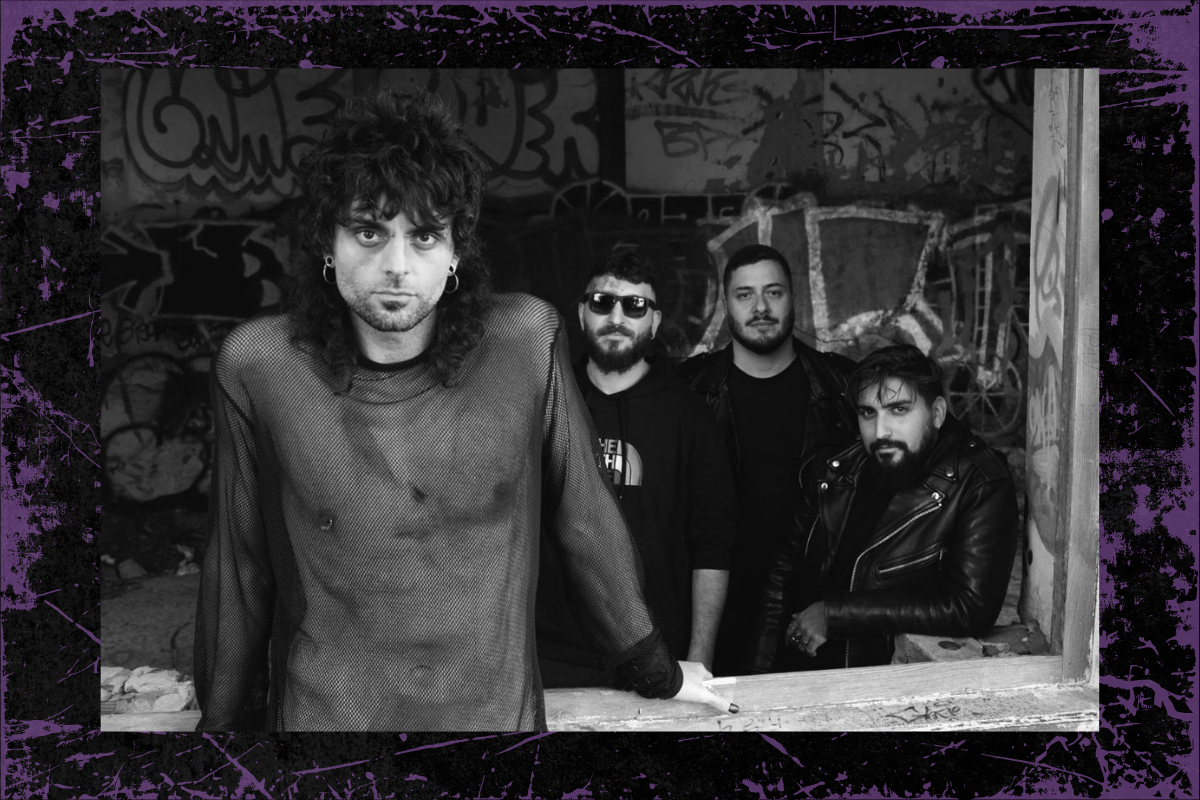
KATARTIKA
Benvenuti nel futuro della musica con INDIE STORM, il palcoscenico che illumina i talenti emergenti del panorama indipendente.
Il cinquantaduesimo appuntamento si apre con i KATARTIKA, che ci propongono IL LORO NUOVO ALBUM "THROUGH THE MIRROR: DEPTHS.".
Un'esperienza esclusiva per scoprire il cuore pulsante della scena musicale indipendente e i suoni che definiranno le prossime tendenze.
Per informazioni scrivete a info@thunderrock.it.
ENGLISH VERSION : KATARTIKA
Welcome to the future of music with INDIE STORM, the stage that shines a light on emerging talents from the independent scene.
The fifty‑second edition opens with KATARTIKA, who present their new album “THROUGH THE MIRROR: DEPTHS.”
An exclusive experience to discover the beating heart of the independent music scene and the sounds that will shape the trends of tomorrow.
For information, write to info.
Intervista scritta
1. Come è nata la vostra band?
La nostra band nasce da un progetto dark-tech elettronico ideato da Fabrizio Caruso (voce) e Riccardo Tuttorosa (chitarra e sequenze), che aveva pubblicato un EP sperimentale. Con il tempo è emersa l’esigenza di tornare a sonorità più familiari — alternative rock, nu metal, grunge e industrial — e così abbiamo trovato prima Marco Soccini alla batteria e Danilo Guidetti al basso, poi Luca Pais alle tastiere e synth per completare il sound. Abbiamo deciso di eliminare tutto il materiale precedente per mantenere coerenza sonora.
2. Quali sono le vostre principali influenze musicali?
L’amore per il grunge e il noise degli anni ’90 è sicuramente la parte più influente nella nostra musica (Alice in Chains, Sonic Youth, Nirvana, Queens of the Stone Age, ecc.), ma guardiamo anche al mondo nu metal dei primi 2000 (Deftones, Linkin Park) e alla vastità sonora ed eclettica dei Nine Inch Nails, band di cui il cantante è letteralmente innamorato.
In realtà, nella nostra musica si possono trovare molte altre sfumature, non sempre direttamente connesse: i Metallica, grande passione di Marco, Danilo e Riccardo, e le atmosfere malinconiche e intime dei Radiohead e dei Muse, che ispirano la parte melodica di Fabrizio.
3. Qual è il significato dietro il nome della vostra band?
Katartika deriva da “catarsi”: purificazione e liberazione. Da un punto di vista psicologico rappresenta il momento in cui si riesce a esternare i propri demoni o preoccupazioni, superando finalmente i blocchi emotivi. La nostra musica è la nostra migliore forma di cura.
4. Cosa possiamo aspettarci dal vostro prossimo album?
L’ingresso di Luca Pais nella nostra band ha finalmente completato il cerchio sonoro che ricercavamo, dandoci quella completezza atmosferica che solo tastiere e synth possono offrire — almeno secondo la nostra idea di musica. Stiamo sperimentando molto e lavorando a nuovi brani.
5. Qual è il vostro album preferito di tutti i tempi?
- Riccardo Tuttorosa: Linkin Park – Meteora
- Danilo Guidetti: Slipknot – Vol. 3: The Subliminal Verses
- Marco Soccini: Metallica – Ride the Lightning
- Fabrizio Caruso: Nine Inch Nails – The Downward Spiral
- Luca Pais: Depeche Mode – Songs of Faith and Devotion
-
In White Fog raccontate una spirale di dipendenza fatta di loop, rituali e stanze chiuse. Quanto è stato difficile trasformare un’esperienza così cruda in un brano che resta autentico senza perdere la sua umanità?
White fog nasce proprio dall’esigenza di voler esprimere tutta la spirale di emozioni appena descritte il Processo creativo del brano non è stato rapido e per trovare la giusta carica di sensazioni c’è voluto un po di tempo dove ogniuno di noi ha contribuito per cercare il sound ideale a questo contesto, il brano dopotutto descrive scenari che tutti noi nel bene o nel male abbiamo vissuto (indirettamente o direttamente) rendendo chiaro il concept da subito. -
In Darkside of Happiness emerge una felicità ribaltata, quasi tossica, e la fine simbolica dell’innocenza. Come avete costruito questo “lato oscuro” e in che modo riflette la pressione sociale del dover essere sempre all’altezza?
Il brano descrive due facce della stessa medaglia dove ci troviamo ad indossare una maschera considerata dalla società felice nonostante quello che si cela dietro sia un turbine di sensazioni di disagio, inadeguatezza e di aspettative che si creano sull’individuo, dovendo rappresentare questo in un brano abbiamo optato per una sonorità più industrial con una strofa dai ritmi scanditi ed "irrequieti" come chi affronta questa vita oggi, che trovano uno sfogo in un ritornello che si apre quasi a rappresentare questo stress che vogliamo mascherare a tutti i costi. -
Il brano Mirror è una discesa continua verso il proprio riflesso, tra ammissioni, crepe e verità scomode. Qual è stata la consapevolezza più difficile da accettare durante la scrittura di questo pezzo?
In mirror prendiamo la consapevolezza di quanto siamo soggetti a questo tipo di discese introspettive e della nostra condizione da esseri umani ,dove una ricerca costante della perfezione ( frequenze/suoni/strumenti) ci porta inevitabilmente a generare entropia dove (non lo neghiamo ) ci troviamo a nostro agio. -
L’intero EP è attraversato da cicli che tornano: “again”, “loop”, “di nuovo”. Perché avete scelto di rappresentare l’esperienza emotiva come un movimento circolare invece che come un percorso lineare?
I nostri brani e di conseguenza tutto l’ep sono la rappresentazione di quello che viviamo quotidianamente, e come tale durante il corso di esso si affrontano emozioni del tutto contrastanti anche solo nel di giro di poche ore questo fa in modo che non possa trattarsi di un percorso lineare ma piuttosto come delle montagne russe che si ripetono allo sfinimento -
Il nuovo video è estremamente accattivante e visivamente potente. Qual è l’immagine che, più di tutte, sintetizza il viaggio di Through the Mirror: Depths e quale sensazione volete che lo spettatore provi nel momento in cui la vede?
Forse l’immagine più potente che abbiamo associato al nostro lavoro é quella del palloncino con la faccia sorridente che all’impovviso scoppia , calza a pennello con la metafora del generare caos anche in un istante apparente felice dove l’estetica lascia spazio ad un silenzio assordante, nei nostri brani proviamo a esprimere esattamente questa contrapposizione, melodie più delicate intervallate da momenti più duri e ruvidi -
Pubblicare Through the Mirror: Depths significa esporre una parte di voi estremamente vulnerabile, fatta di loop mentali, dipendenze, specchi e verità scomode. Come vi sentite nel condividere con il pubblico un lavoro così personale e cosa sperate che arrivi davvero a chi lo ascolta?
La nostra speranza è quella di poterci mostrarci nudi e senza filtri per riuscire ad arrivare a più persone possibili , perché come noi davvero tanta gente vive scenari analoghi e l’unico modo per poter comunicare questo in maniera efficiente è esporci totalmente togliendo ogni tipo di armatura
Recensione a cura di Vins
KATARTIKA - Watch me die
Cos'è l'originalità?
Inventare qualcosa che prima non esisteva, sembrerebbe l'unica definizione, ma secondo me non è proprio così.
Si può essere originali anche copiando, se si è capaci di miscelare varie ispirazioni nel giusto modo, fino a creare qualcosa di completamente nuovo, come molti artisti e molti generi musicali ci hanno insegnato, vedi il Grunge ad esempio, che è stato capace di mixare e reinterpretare molti generi al suo interno.
Non sono da meno i Katartika, che mixano, reiterpretano e stravolgono pescando tra le cose migliori in circolazione tra gli anni 90 e il decennio successivo, con una sensibilità e personalità uniche e definite.
"Watch Me Die" è un esempio perfetto di questo mix: si trova del Post Grunge del Gothic Metal, dell'Emo Core, e atmosfere prog alla "Tool" , "A Perfect Circle" con un tocco di Nu Metal, ma il tutto è talmente ben distribuito che si fa fatica a dire dove comincia una cosa e finisce l'altra, rendendo i Katartika di fatto una band originale, con un brano dalla melodia trascinante e spiazzante, immediata ma mai banale, fresca e dark allo stesso tempo, e oggi dove tutti cercano di essere inseriti in un filone specifico per guadagnare una fandome sicura, è un gesto coraggioso, oltre che più che apprezzabile, visti i risultati.
"Watch Me Die" vi trascinerà e vi obbligherà a più ascolti, e anche questo è un pregio.
KATARTIKA - Darkside of Happiness
Come si sceglie il titolo di una canzone?... Come si decide di cosa parlerà una parte strumentale?...
Per quel che mi riguarda come compositore, inizia tutto con una nota, poi un accordo, una piccola melodia e una parola che rimane appiccicata su un giro specifico, quello sarà il ritornello, quello sarà il titolo...
L'atmosfera, il mood naturale di ogni canzone non solo suggerisce il titolo, ma lo crea, come se la musica stessa ti dicesse come vuole essere chiamata...
Darkside of Happiness è proprio questo.
I Katartika sono bravi a creare melodie che ti trascinano in un certo mood, e Fabrizio fa il resto, trova le parole adatte, incolla il ritornello che gli ronza in testa da ore, e il brano diventa un martello così preciso che non puoi fare a meno di pensare che la canzone non possa essere diversa, e che non sia stata composta da un gruppo di giovanissimi musicisti, ma che sia nata da sola, pronta a rimanerti in testa, con il suo groove, la sua energia, e la sua disperazione oscura.
Darkside of Happiness è quello che dice di essere, un brano Dark elettronico anni 80, con un pizzico di Emocore per ricordarci che il passato non è morto ma è solo stato rivisitato, e i Katartika sono veramente bravi nel fare questo.
Vins Bound
Biografia
Nati dalle ombre di Genova, i Katartika fondano il loro suono sull’intensità e sull’emozione. La loro musica spazia tra rock industriale, nu metal e grunge, alternando atmosfere dense, di tensione e di liberazione.
Inizialmente un duo darktech composto da Fabrizio Caruso (voce) e Riccardo Tuttorosa (chitarra e sequenze), si evolve poi nell’attuale formazione di cinque elementi, tutti orientati verso un sound più rock.
La voce di Fabrizio Caruso passa da toni puliti e profondi a urla viscerali e cariche di emozione; le chitarre affilate di Riccardo Tuttorosa, le linee di basso pulsanti di Danilo Guidetti, la batteria primordiale di Marco Soccini e le trame elettroniche oscure di Luca Pais completano la loro architettura sonora.
Il sound dei Katartika è intimo e apocalittico: un rituale di distorsione ed emozione, dove le ombre parlano e il silenzio brucia. La loro musica non cerca il conforto, ma la catarsi.
Track-by-track commentary
KATARTIKA – Through the Mirror / Surface & Through the Mirror / Depth
La nostra visione del mondo e di noi stessi attraverso lo specchio — ovvero la società. Il primo EP (Surface), quello che pubblicheremo domani, racconta come ci vediamo o pensiamo di essere, e come vorremmo essere. Attraverso quello specchio, attraversiamo le difficoltà di un’idea di sé preconfezionata, pilotata da una cultura e da una ragione superiori al nostro sentire e al nostro vero io naturale: forzature che ci distruggono e ci condannano a vivere la vita di qualcun altro, in un’inevitabile agonia.
Depth (seconda parte, in uscita tra un mese) rappresenta la presa di coscienza di questa immagine e ci riporta alla narrazione di quel momento.
KATARTIKA – Watch Me Die
Il declino del narcisista. Il prodotto ideale e più ricorrente del marcio della nostra attuale società, che viene letteralmente ucciso dall’indifferenza della sua vittima preferita (l’empatico), che finalmente “si sveglia” e smette di accudirlo e idolatrarlo, rinunciando alla sua attenzione. Un paradosso che mostra quanto spesso possiamo sentirci vittime di uno pseudo-narcisista, definendolo tale, mentre noi stessi siamo ugualmente narcisisti nella spasmodica ricerca di attenzioni.
KATARTIKA – Dissociative Disease
Bullismo e tentativi di boicottaggio sociale verso chi, avendo “qualcosa in più”, non riesce a confrontarsi o condividere i propri pensieri con la “massa mediocre”, che preferisce punirli concedendo loro un’apparente vittoria, isolandoli ma costringendoli alla frustrazione di non riuscire a scalfirli.
KATARTIKA – Recognized:
Il bisogno di essere riconosciuti e visti in una società che scalpita di performance e che ci ha fatto credere che se non sei sul podio non sei nessuno. Il ritornello cita una frase che dice: "i raise my finger,i draw a few more". Il cantante: "Da bambino tracciavo linee nel vuoto immaginando di disegnare qualcosa(disegnavo molto), il momento più ricco di vita spontanea, libera da ogni credenziale di felicità o soddisfazione preconfezionata, una libertà tipica di un bambino che ancora oggi a volte fa cose del genere e che reealizza di sentirsi finalmente libero e se stesso in momenti del genere".
KATARTIKA – More / Deep
Ballad orchestrale (piano, voce e archi) che parla delle dipendenze e di quanto sia importante riempire, in ogni modo, quello spazio vuoto che non sempre si riesce a colmare in maniera sana.
KATARTIKA – Guilty
Un viaggio nella mente di un adolescente alle prese con il normale autoerotismo, travolto dai sensi di colpa imposti dalla cultura cattolica con cui è cresciuto, sentendosi un mostro. Riconosciuto e giudicato da una società della performance, diventa ciò che gli altri hanno definito.
KATARTIKA –Darkside of Happiness:
L'irrequietezza può essere un grande motore di spinta,specie in una società sonica come quella di oggi, feroce di performance ed ecletticità a tal punto da costringerti quasi ad esserlo.
L'inevitabile rovescio della medaglia che ti si ritorce contro, nessun traguardo sarà mai abbastanza, potrebbe non essere mai visto, potrebbe mai esistere.
KATARTIKA – Mirror:
Concept dell'album ed origine dello stesso.
Guardarsi allo specchio,riconoscere le proprie ferite passate,galleggiare tra il dolore e la serenità di chi è consapevole che finchè sorriderà per le proprie lacrime avrà fatto dei suoi demoni solo un utile ricordo. ( murder of my infancy)
KATARTIKA – White Fog:
Le dipendenze possono essere parte integrante della nostra personalità,essere ben gestite spostandole su sane abitudini,così come ristruggerci specie quando si tratta di sostanze come la cocaina.
Una persona a noi cara vede il suo matrimonio perdersi in una fittissima "nebbia bianca" capace di sdradicare anche l'ultimo briciolo di emotività rimasta.
Written interview by Arianna Rebel.
1. How was your band formed?
Our band was born from a dark-tech electronic project created by Fabrizio Caruso (vocals) and Riccardo Tuttorosa (guitar and sequences), who had released an experimental EP. Over time, the need to return to more familiar sounds—alternative rock, nu metal, grunge, and industrial—led us to find Marco Soccini on drums and Danilo Guidetti on bass, later joined by Luca Pais on keyboards and synths to complete the sound. We decided to discard all previous material to maintain sonic coherence.
2. What are your main musical influences?
Our love for ’90s grunge and noise is definitely the most influential part of our music (Alice in Chains, Sonic Youth, Nirvana, Queens of the Stone Age, etc.), but we also look toward the early 2000s nu metal scene (Deftones, Linkin Park) and the vast, eclectic sound of Nine Inch Nails — a band the singer is truly in love with.
In fact, you can find many other shades in our music, not always directly connected: Metallica, a great passion for Marco, Danilo, and Riccardo, and the melancholic, intimate atmospheres of Radiohead and Muse, which inspire Fabrizio’s melodic side.
3. What is the meaning behind your band’s name?
Katartika comes from “catharsis”: purification and liberation. From a psychological point of view, it represents the moment when one manages to externalize their demons or worries, finally overcoming emotional blocks. Our music is our best form of therapy.
4. What can we expect from your next album?
The arrival of Luca Pais in our band has finally completed the sonic circle we were searching for, giving us that atmospheric fullness that only keyboards and synths can provide—at least according to our concept of music. We’re experimenting a lot and working on new tracks.
5. What is your favorite album of all time?
- Riccardo Tuttorosa: Linkin Park – Meteora
- Danilo Guidetti: Slipknot – Vol. 3: The Subliminal Verses
- Marco Soccini: Metallica – Ride the Lightning
- Fabrizio Caruso: Nine Inch Nails – The Downward Spiral
- Luca Pais: Depeche Mode – Songs of Faith and Devotion
- In White Fog you describe a spiral of dependency made of loops, rituals, and closed rooms. How difficult was it to turn such a raw experience into a song that stays authentic without losing its humanity?
White Fog was born from the need to express that entire spiral of emotions. The creative process wasn’t quick, and finding the right emotional charge took time—each of us contributed to shaping the ideal sound for this context. After all, the song describes scenarios that all of us, in one way or another, have lived through, directly or indirectly, making the concept clear from the very beginning. - In Darkside of Happiness, a reversed, almost toxic happiness emerges, along with the symbolic end of innocence. How did you build this “dark side,” and how does it reflect the social pressure of always having to be good enough?
The song describes two sides of the same coin: we find ourselves wearing a mask that society labels as “happy,” even though behind it lies a whirlwind of discomfort, inadequacy, and expectations placed on the individual. To represent this in a track, we chose a more industrial sound, with a verse built on restless, tight rhythms—just like those who face life today—and a chorus that opens up, almost symbolizing the release of the stress we try so hard to hide. - The track Mirror is a continuous descent toward one’s own reflection, between admissions, cracks, and uncomfortable truths. What was the hardest awareness to accept while writing this piece?
In Mirror we acknowledge how often we fall into these introspective descents and how human this condition is. The constant search for perfection—in frequencies, sounds, instruments—inevitably generates entropy, and we won’t deny it: we feel strangely at home in that chaos. - The entire EP is crossed by recurring cycles: “again,” "loop," and “di nuovo.” Why did you choose to represent the emotional experience as a circular movement instead of a linear path?
Our songs—and therefore the whole EP—are a representation of what we live every day. Throughout it, we face completely contrasting emotions even within the span of a few hours. This makes it impossible to describe a linear journey; it’s more like a roller coaster repeating itself endlessly. - The new video is visually striking and extremely powerful. Which image best captures the journey of Through the Mirror: Depths, and what do you want the viewer to feel when they see it?
- Perhaps the most powerful image we associate with our work is the balloon with a smiling face that suddenly bursts. It fits perfectly with the metaphor of generating chaos even in an apparently happy moment, where aesthetics give way to a deafening silence. In our songs, we try to express exactly this contrast: delicate melodies interrupted by harsher, rougher moments.
- Releasing Through the Mirror: Depths means exposing a deeply vulnerable part of yourselves — mental loops, dependencies, mirrors, and uncomfortable truths. How do you feel about sharing such personal work with the public, and what do you hope listeners truly take away from it?
Our hope is to show ourselves naked and without filters so we can reach as many people as possible. Because, like us, many others live similar scenarios, and the only way to communicate this effectively is to expose ourselves completely, removing every kind of armor.
Review by Vins
KATARTIKA – Watch Me Die
What is originality?
Inventing something that didn’t exist before might seem like the only definition, but to me, that’s not quite it.
You can be original even when you copy, if you’re able to mix various inspirations in the right way, until you create something completely new — as many artists and musical genres have taught us. Take Grunge, for example: it was able to mix and reinterpret many styles within itself.
Katartika are no exception. They mix, reinterpret, and overturn influences, drawing from the best sounds circulating between the ’90s and the following decade, with a sensitivity and personality that are both unique and well-defined.
“Watch Me Die” is a perfect example of this mix: you can find Post-Grunge, Gothic Metal, Emo Core, and prog atmospheres reminiscent of Tool and A Perfect Circle, with a touch of Nu Metal. Yet everything is so well balanced that it’s hard to say where one influence ends and another begins, making Katartika an original band in their own right — with a track that’s gripping and disarming, immediate yet far from banal, fresh and dark at the same time.
Today, many try to fit into a specific niche to gain a fandom, but Katartika stand out precisely because they don’t chase formulas. Their authenticity is undeniable — and the results speak for themselves.
“Watch Me Die” will draw you in and compel you to listen again and again — and that, too, is a virtue.
Certo Arianna — ti traduco tutto il testo in inglese, in modo fluido, naturale e perfetto per una pagina ufficiale o una presentazione internazionale dei Katartika.
KATARTIKA - Darkside of Happiness
How do you choose the title of a song? How do you decide what a purely instrumental part is supposed to say?
For me, as a composer, everything begins with a single note… then a chord… a small melody… and a word that sticks to a specific riff. That word becomes the chorus. That word becomes the title.
The atmosphere—the natural mood of every song—doesn't just suggest the title… it creates it. As if the music itself were telling you what it wants to be called.
Darkside of Happiness is exactly that.
Katartika are incredibly good at crafting melodies that pull you into a specific mood, and Fabrizio does the rest: he finds the right words, he glues together the chorus that’s been echoing in his head for hours, and the song becomes such a precise hammer that you can’t help but feel it couldn’t be anything else. It doesn’t sound like it was written by a group of very young musicians — it feels like it was born on its own, ready to stay in your head with its groove, its energy, and its dark desperation.
Darkside of Happiness is exactly what it claims to be: an 80s-style dark electronic track, with a touch of emocore to remind us that the past isn’t dead—it's just been revisited. And Katartika are truly skilled at doing just that.
Vins Bound
Biography
Born from the shadows of Genoa, Katartika build their sound on intensity and emotion. Their music ranges from industrial rock to nu metal and grunge, alternating between dense atmospheres of tension and liberation.
Originally a darktech duo formed by Fabrizio Caruso (vocals) and Riccardo Tuttorosa (guitar and sequences), the project later evolved into the current five-member lineup, all leaning toward a more rock-oriented sound.
Fabrizio Caruso’s voice shifts from clean, deep tones to visceral, emotional screams; Riccardo Tuttorosa’s sharp guitars, Danilo Guidetti’s pulsing bass lines, Marco Soccini’s primal drums, and Luca Pais’s dark electronic textures complete their sonic architecture.
Katartika’s sound is both intimate and apocalyptic — a ritual of distortion and emotion, where shadows speak and silence burns. Their music does not seek comfort, but catharsis.
Track by track commentary
KATARTIKA – Through the Mirror / Surface
A vision of the world and of ourselves through the mirror — or rather, through what we would publish tomorrow — tells how we see ourselves and how we would like to be. Through that mirror, crossing the line between reality and illusion, we are guided by a culture and reason superior to our feelings and instincts. They destroy us and condemn us to live someone else’s life in inevitable agony. Depth (the second part, scheduled for release in a month) is the awareness of this image, which leads us back to the narrative of that moment.
KATARTIKA – Watch Me Die
The decline of the narcissist. The ideal and most recurring product of the decay of our society, literally killed by the indifference of their favorite victim (the empath), who finally “wakes up” and stops nurturing and idolizing them, renouncing attention. A paradox that often shows how we ourselves can feel like victims of a pseudo-narcissist, defining them as such while we are equally narcissistic in our obsessive search for attention.
KATARTIKA – Dissociative Disease
Bullying and attempts at social boycott toward those who, having “something more,” cannot confront or share their thoughts with the “mediocre mass,” which prefers to punish them by granting an apparent victory, isolating them but forcing them into the frustration of not being able to scratch their integrity.
KATARTIKA – Recognized
The need to be recognized and seen in a society obsessed with performance, a society that made us believe that if you’re not on the podium, you’re nobody.
The chorus quotes the line: “I raise my finger, I draw a few more.”
The singer explains:
“As a child I used to trace lines in the air, imagining I was drawing something — I used to draw a lot. It was the richest moment of spontaneous life, free from any prepackaged idea of happiness or satisfaction. A kind of freedom that only a child can have. Even today I sometimes find myself doing the same thing, and in those moments I realize I finally feel free and truly myself.”
KATARTIKA – More/Deep
An orchestral ballad (piano, voice, and strings) that speaks of addiction and how important it is to fill that empty space that cannot always be healed in a healthy way.
KATARTIKA – Guilty
A journey into the mind of an adolescent caught in normal self-eroticism, overwhelmed by the inevitable feelings of guilt imposed by Catholic culture, with which he grows up, feeling like a monster. Recognized and judged by a society of performance, he becomes what others have defined him to be.
KATARTIKA – Darkside of Happiness
Restlessness can be a powerful driving force—especially in a sonic society like today’s, fierce in its demand for performance and eclecticism, to the point of almost forcing you to embody it. The inevitable flip side is that it turns against you: no achievement will ever feel enough, it may never be seen, and it may never truly exist.
KATARTIKA – Mirror
The concept and origin of the album. Looking at yourself in the mirror, recognizing past wounds, floating between pain and the serenity of someone who knows that as long as they can smile at their own tears, they’ve turned their demons into nothing more than a useful memory. (“Murder of my infancy”)
KATARTIKA – White Fog
Dependencies can become an integral part of our personality — they can be managed and redirected into healthy habits, or they can destroy us, especially when substances like cocaine are involved. Someone close to us watched their marriage dissolve into a dense “white fog,” capable of uprooting even the last shred of emotion left.
OFFICIAL VIDEO: KATARTIKA
COVER OF THE ALBUM


Aggiungi commento
Commenti